How I Found My Calm: A Real Talk Guide to Meditation for Mental Balance
Ever feel like your mind won’t shut off? I’ve been there—stressed, scattered, and searching for peace. That’s when I turned to meditation, not as a trend, but as a lifeline. Over time, it helped me regain focus, reduce mental noise, and find real psychological balance. This isn’t about perfection; it’s about progress. Let me walk you through how simple, consistent practice can quietly transform your inner world—no hype, just honesty.
The Breaking Point: When My Mind Was Too Loud
It started with sleepless nights. Not the occasional restlessness, but a steady pattern of lying awake, mind racing through unfinished tasks, upcoming responsibilities, and old conversations I wished I could redo. I was a mother of two, managing a household, supporting my husband’s career, and trying to maintain some sense of personal identity. On paper, life looked full and blessed. Inside, I felt frayed at the edges—constantly on edge, snapping at small things, and feeling emotionally drained even after a full night’s rest.
The breaking point came during a routine school pickup. My younger daughter dropped her juice box in the car, and I reacted with such disproportionate frustration that she burst into tears. I immediately regretted it. That moment shook me. I didn’t want to be someone who lost control over spilled juice. I realized my stress wasn’t just affecting me—it was shaping the emotional atmosphere of my home. I had been treating burnout like a normal part of adult life, but it wasn’t normal. It was a sign that my psychological balance was off.
I had tried typical coping strategies: longer to-do lists, more coffee, binge-watching shows to ‘unwind.’ But these only masked the noise; they didn’t quiet it. In fact, they often made it worse. The constant busyness was a distraction, not a solution. What I truly needed wasn’t more activity, but stillness. I began to wonder: what if, instead of escaping my thoughts, I learned to sit with them? That curiosity led me to meditation—not as a mystical practice, but as a practical tool for mental recovery.
Meditation Demystified: What It Really Is (and Isn’t)
Before I started, I had a lot of misconceptions about meditation. I imagined monks on mountaintops, people chanting in perfect silence, or someone who could stop thinking entirely. I thought, ‘I could never do that—I’m too busy, too restless.’ But what I’ve learned is that meditation isn’t about stopping your thoughts or achieving spiritual enlightenment. It’s about learning to observe your mind without reacting to every passing thought. It’s a mental training, much like physical exercise strengthens the body.
Scientifically, meditation works by calming the sympathetic nervous system—the part responsible for the ‘fight or flight’ response—and activating the parasympathetic system, which promotes relaxation and recovery. Studies have shown that regular meditation can reduce cortisol levels, the hormone linked to stress, and increase gray matter in brain regions associated with emotional regulation and focus. These changes don’t happen overnight, but with consistency, they create a measurable shift in how we experience daily life.
Mindfulness, a core component of many meditation practices, is simply the act of paying attention to the present moment without judgment. This awareness helps break the cycle of rumination—replaying past events—or anxiety about the future. When we practice mindfulness, we’re not trying to feel a certain way; we’re learning to be with what is. Over time, this builds psychological balance, not by eliminating stress, but by changing our relationship to it.
There are several forms of meditation, and not all are the same. Focused attention meditation involves bringing your awareness to a single point, such as the breath, a word (mantra), or a sensation. When your mind wanders, you gently return your focus. Body scan meditation guides attention through different parts of the body, helping release physical tension and increase bodily awareness. Loving-kindness meditation involves silently repeating phrases of goodwill toward yourself and others, which can reduce self-criticism and increase compassion. For someone starting out, especially under stress, any of these can be helpful. The key is not to find the ‘best’ method, but the one that feels accessible and sustainable.
Starting Small: My First 5-Minute Experiment
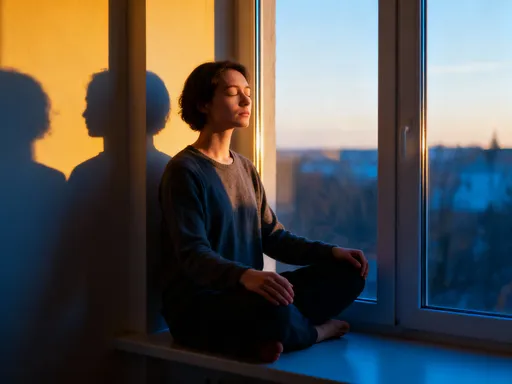
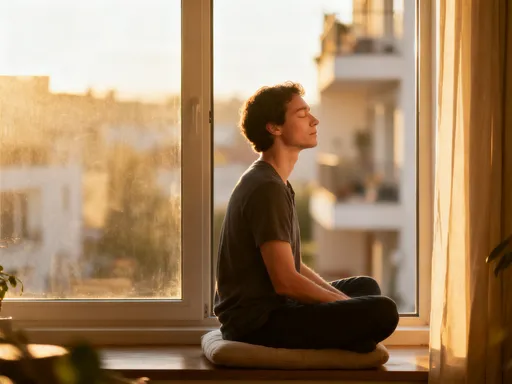
I didn’t begin with lofty goals. In fact, I promised myself I wouldn’t do anything for more than five minutes. That small commitment made it feel manageable. I chose a quiet corner of my bedroom, sat on a cushion with my back straight but not stiff, and set a gentle timer on my phone. I closed my eyes and focused on my breath—just the sensation of air moving in and out of my nostrils. Within seconds, my mind wandered to my grocery list. I noticed it, gently brought my attention back, and continued.
The first few days were humbling. I didn’t feel calm. I didn’t feel transformed. I mostly felt awkward and impatient. But I kept showing up. I reminded myself that meditation isn’t about achieving a state; it’s about practicing the return. Each time I noticed my mind had drifted and brought it back, I was doing the work. That small act of redirection is the core of mental training.
I chose to meditate in the morning, right after brushing my teeth. This timing worked because it became part of my existing routine, reducing the need for extra motivation. I didn’t need special clothes or incense—just a few minutes of intention. I also avoided meditating right after a heavy meal or during moments of high emotional intensity, as those made focus more difficult.
After the first week, I began to notice subtle shifts. I wasn’t less busy, but I was less reactive. When my son spilled cereal on the floor, I paused before responding. That pause—once nonexistent—was now a space where I could choose my reaction. It felt small, but it was significant. I also noticed I was falling asleep more easily at night. These early signs gave me enough encouragement to keep going, even when the practice felt dry or uneventful.
Building the Habit: From “Trying” to “Doing”
Consistency is where most people struggle, and I was no exception. There were days I forgot, days I felt too tired, and days I convinced myself I was ‘too busy.’ But I learned that willpower alone isn’t enough to build a lasting habit. What helped me was habit stacking—linking meditation to something I already did every day. Since I always brushed my teeth in the morning, I made meditation the very next step. This simple pairing turned meditation from a task into a natural part of my routine.
I also used gentle reminders. I placed a small note on my bathroom mirror that said, ‘Breathe first.’ I set a soft alarm on my phone labeled ‘Pause.’ These cues weren’t demanding; they were invitations. I avoided apps with streak counters at first because they added pressure. Instead, I used a simple journal to mark days I meditated with a checkmark. Seeing the chain grow motivated me more than any digital badge.
Another strategy was lowering the bar. On tough days, I told myself, ‘Just sit for one minute.’ Often, once I started, I stayed longer. But even if I only did one minute, I honored the effort. This approach removed the guilt of ‘failing’ and kept the habit alive. Over time, the act of sitting became less about the duration and more about the intention to show up for myself.
What surprised me was how quickly meditation began to influence other areas of my life. I started noticing when I was mindlessly scrolling on my phone or eating without awareness. The practice wasn’t confined to those five minutes; it was spilling into my daily choices. I wasn’t just meditating—I was becoming more mindful in ordinary moments, and that made all the difference.
When It Felt Hard: Pushing Through Doubt and Discomfort
Let’s be honest—meditation isn’t always peaceful. There were days when sitting still felt unbearable. My legs ached, my mind raced, and I questioned why I was wasting time doing nothing. I felt bored, frustrated, and sometimes even more anxious after a session. These experiences were discouraging, but I later learned they were completely normal. Discomfort is not a sign that meditation isn’t working; it’s often a sign that it is.
Our brains are wired for action, not stillness. When we slow down, suppressed thoughts and emotions can surface. This isn’t a flaw in the practice—it’s part of the process. Just as physical exercise can cause muscle soreness before strength builds, mental training can bring temporary discomfort as the mind adjusts. The key is to approach this with self-compassion, not criticism.
When resistance peaked, I gave myself permission to adapt. Sometimes I switched to a walking meditation, focusing on each step. Other times, I shortened the session or tried a guided meditation to give my mind a bit more structure. I also reminded myself that meditation isn’t about achieving comfort—it’s about developing the ability to stay present, even when it’s hard.
Self-compassion became my anchor. Instead of berating myself for being distracted, I learned to say, ‘It’s okay. This is part of the journey.’ This shift in attitude made a huge difference. When I stopped judging my performance, the practice became kinder, more sustainable. I wasn’t trying to be perfect—I was learning to be patient with myself, and that patience began to extend beyond meditation into my relationships and daily life.
Seeing the Shift: How My Mindset Changed Over Weeks
After about six weeks of consistent practice, the changes became more noticeable. I wasn’t a different person, but I was responding to life differently. I had more mental clarity. Tasks that once felt overwhelming now seemed manageable. I could focus on one thing at a time without jumping to the next item on my mental list. This improved focus wasn’t just helpful at home—it spilled over into how I managed household budgets, planned meals, and supported my children’s schoolwork.
One of the most meaningful shifts was in my emotional regulation. I began to catch myself before reacting in tense moments. When my teenager slammed a door, my old response would have been to shout back. Now, I took a breath. That breath created space—a moment to choose calm instead of conflict. Over time, these small pauses added up to a calmer home environment. My family even noticed. My husband said, ‘You seem more present. Like you’re really here.’ That feedback meant more than any meditation app could measure.
I also became more aware of my thought patterns. I noticed how often I criticized myself for small mistakes or worried about things beyond my control. Meditation didn’t erase these thoughts, but it helped me see them as passing mental events, not truths. I could observe, ‘I’m having the thought that I’m not doing enough,’ without believing it or acting on it. This awareness reduced the power of negative self-talk and fostered a kinder inner voice.
Sleep improved, too. I no longer lay awake replaying conversations or planning tomorrow’s schedule. My mind felt less cluttered, and that clarity made it easier to transition into rest. I didn’t need sleep aids or strict routines—just the ability to let go, which meditation had quietly taught me.
Making It Yours: Simple Ways to Deepen Your Practice
As my comfort with sitting meditation grew, I began to explore other ways to bring mindfulness into my day. Mindful walking became a favorite. Instead of rushing from room to room, I started paying attention to the sensation of my feet touching the floor. Even a short walk to the mailbox became a chance to ground myself in the present.
Mindful eating was another powerful shift. I began to slow down during meals, noticing the taste, texture, and smell of my food. This not only made eating more enjoyable but also helped me recognize when I was full, reducing overeating. I didn’t turn every meal into a meditation, but I chose one meal a day to eat without distractions—no phone, no TV. That small act brought a sense of calm and gratitude to my routine.
Integrating mindfulness into daily tasks didn’t require extra time. While washing dishes, I focused on the warmth of the water and the sound of clinking plates. While folding laundry, I paid attention to the fabric and the rhythm of my movements. These moments weren’t about productivity—they were about presence. Over time, I realized that mindfulness wasn’t something I did; it was a way of being.
After a few months, I explored guided meditations through a reputable wellness app. These were helpful when I felt stuck or wanted to focus on specific themes like gratitude or resilience. I also attended a local meditation group, which provided gentle accountability and a sense of community. These resources weren’t necessary, but they enriched my practice when I was ready.
The long-term mindset I’ve adopted is this: meditation is not a destination, but a lifelong tool for psychological resilience. Life will always have stress—children get sick, plans change, challenges arise. But meditation has given me an inner anchor, a way to return to center no matter what’s happening around me. It’s not about avoiding difficulty; it’s about meeting it with clarity and calm.
Meditation isn’t a quick fix—it’s a quiet revolution. Over time, it reshaped how I relate to my thoughts and emotions, bringing a steadiness I once thought impossible. You don’t need hours or expertise; just willingness and consistency. Psychological balance isn’t about eliminating stress, but building the inner strength to navigate it. This journey isn’t about becoming someone else—it’s about returning to yourself, one breath at a time.