Lost in Manila’s Soul: Where Walls Whisper History
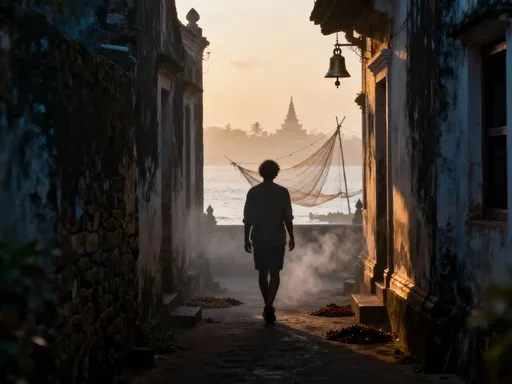
Ever walked through a city and felt like the buildings were telling secrets? Manila hit me like that—colonial facades, neon-lit modern towers, and centuries-old churches standing side by side. I didn’t expect architecture to move me, but here, every street corner tells a story of resilience, fusion, and raw beauty. From Spanish-era gems to bold contemporary designs, Manila’s structures aren’t just eye candy—they’re memory keepers. If you’re coming here, don’t just chase food or shopping. Open your eyes to the city’s architectural heartbeat. Trust me, it changes how you see everything.
First Impressions: Stepping Into a City Built on Layers
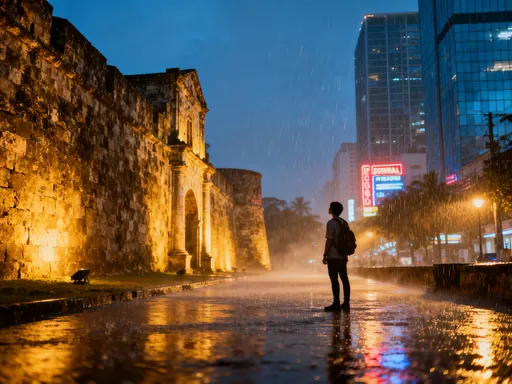
Manila does not reveal itself all at once. Instead, it unfolds in layers—century upon century stacked like pages in a weathered book. The moment you step off the plane and into the humid embrace of the capital, you are met with a visual symphony of styles: weathered stone churches from the 1500s, solemn American-era civic buildings from the early 1900s, and shimmering glass towers that rise like sentinels over Makati and Bonifacio Global City. This is not architectural chaos; it is a living timeline, each structure a chapter in the city’s long and turbulent story.
The city’s built environment reflects its complex past—colonial rule under Spain for over three centuries, followed by American administration in the early 20th century, then Japanese occupation during World War II, and finally, independence and rapid urbanization. Each era left behind a distinct architectural language. Spanish Manila favored thick, fortress-like walls and inward-facing courtyards, designed for both defense and climate control. American planners introduced wide boulevards, neoclassical symmetry, and public plazas meant to inspire civic pride. Today’s high-rises speak of global ambition and economic growth.
Understanding this layering transforms your perception of Manila. What might first appear as a jumble of old and new becomes a coherent narrative. A crumbling Art Deco façade in Quiapo is not just decay—it’s a survivor of a golden age of cinema and commerce. A sleek office tower in BGC is not just glass and steel—it’s a symbol of modern Filipino resilience and innovation. When you learn to read the city’s architecture, you begin to see Manila not as a chaotic metropolis, but as a deeply storied one.
For the thoughtful traveler, especially one who values heritage and meaning, this layered identity offers rich rewards. You don’t need an architecture degree to appreciate it. All it takes is curiosity and the willingness to look up—past the traffic, past the vendors, past the noise—and see the silent stories etched into every wall, arch, and column.
Intramuros: The Heartbeat of Colonial Manila
If Manila has a historic soul, it lives within the walls of Intramuros. This walled city, whose name means “within the walls” in Latin, was the political, religious, and military center of Spanish rule in the Philippines. Founded in 1571, it stood for over 300 years as the heart of colonial power, a place where governors ruled, priests prayed, and soldiers stood guard. Today, it remains one of the most evocative places in Southeast Asia for anyone interested in colonial architecture and urban history.
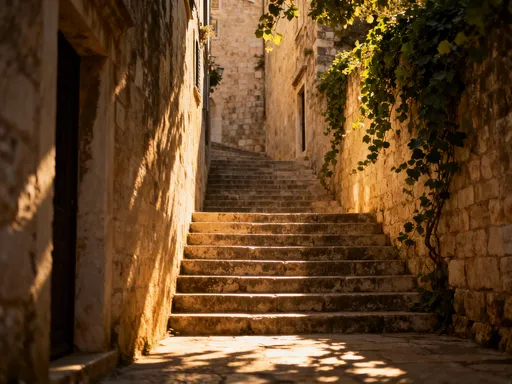
Walking through Intramuros is like stepping into a preserved fragment of the past. The cobblestone streets, made of volcanic rock brought in by galleon ships, echo with the footsteps of centuries. The thick limestone walls, some sections rebuilt after wartime destruction, once protected the city from invaders and typhoons alike. Along the perimeter, bastions like Baluarte de San Diego and the restored Puerta del Parian offer sweeping views of the Pasig River and modern Manila beyond.
At the heart of Intramuros stand three architectural anchors: Fort Santiago, San Agustin Church, and the Manila Cathedral. Fort Santiago, once a military fortress and later a prison during both Spanish and Japanese rule, now serves as a museum and memorial. Its arched gateways and sun-dappled plaza are quiet today, but they carry the weight of history—most notably as the last place where national hero Dr. Jose Rizal walked before his execution.
San Agustin Church, completed in 1607, is the oldest standing stone church in the Philippines and a UNESCO World Heritage Site. Its façade, though modest compared to European cathedrals, is rich with symbolism—carved saints, floral motifs, and a rose window that glows in the late afternoon light. Inside, the church is a revelation: gilded altars, hand-painted frescoes, and a barrel-vaulted ceiling that soars overhead. The acoustics are exceptional, making it a favorite venue for classical concerts and choral performances.
Nearby, the Manila Cathedral has been rebuilt several times due to earthquakes and war, but its current form—completed in 1958—honors its Baroque roots with twin bell towers and a grand central dome. Though less ornate than San Agustin, it holds deep symbolic value as the seat of the Archdiocese of Manila and a site of national ceremonies.
Preservation in Intramuros is not just about saving old buildings. It’s about maintaining a sense of continuity. For Filipino families, especially those with deep roots in the capital, these structures are more than tourist attractions—they are part of their collective memory. When a grandparent points to a church and says, “I was married there,” or “My father was baptized in that font,” the architecture becomes personal. That emotional connection is what gives Intramuros its enduring power.
San Agustin Church: A Masterpiece of Earthquake Baroque
Among the many churches of Manila, San Agustin stands apart—not only for its age but for its architectural ingenuity. Built between 1587 and 1607, it has survived not just time, but war, fire, and repeated earthquakes. While other colonial structures were reduced to rubble, San Agustin remained standing, a testament to the brilliance of its design. This resilience is no accident. The church is a prime example of “Earthquake Baroque,” a unique architectural style developed in the Philippines and other seismically active regions of Latin America.
Earthquake Baroque is characterized by thick, sloping walls made of adobe and brick, low-lying domes, and flexible wooden roof trusses that can absorb seismic shocks. San Agustin’s walls are over two meters thick at the base, tapering slightly as they rise. The church’s bell tower, originally freestanding, was designed to collapse independently in case of a quake, protecting the main structure. These features allowed the church to survive the devastating earthquakes of 1645, 1863, and even the heavy bombardment of World War II.
Inside, the church is a celebration of art and faith. The trompe-l'oeil paintings on the ceiling create the illusion of a much taller space, with cherubs, saints, and swirling clouds appearing to float above. These were painted by Italian and Filipino artists in the 19th century, blending European techniques with local sensibilities. The high altar, carved from molave wood and gilded in gold leaf, is a masterpiece of Filipino craftsmanship. Every detail—from the intricate carvings of vine leaves to the delicate rendering of angelic faces—speaks of devotion and skill.
What makes San Agustin truly special is the fusion of cultures embedded in its design. While the overall style is Spanish Baroque, the materials, labor, and many decorative elements are Filipino. The church was built by local masons, carpenters, and artists who adapted European models to their own traditions. The result is not a copy, but a reinterpretation—a uniquely Filipino expression of faith and artistry.
Today, San Agustin is not just a place of worship. It also houses a museum with an extraordinary collection of religious artifacts—vestments, silver chalices, antique maps, and centuries-old liturgical books. For visitors, a guided tour offers insight into the church’s history, construction, and cultural significance. More than any other building in Manila, San Agustin embodies the idea that architecture can be both functional and spiritual, strong enough to withstand earthquakes and beautiful enough to lift the soul.
American-Era Buildings: When Manila Went Modern
After the Spanish-American War in 1898, the Philippines came under American administration, and Manila entered a new architectural era. The Americans brought with them a vision of modern urban planning, inspired by the City Beautiful movement—a progressive design philosophy that emphasized grand public spaces, symmetry, and civic pride. This period, from the early 1900s to the 1930s, left behind some of Manila’s most elegant and enduring public buildings.
One of the most iconic examples is the Manila Post Office Building, located along the banks of the Pasig River. Completed in 1926, it features a neoclassical façade with massive Corinthian columns, a central dome, and wide arched windows. The building’s symmetrical layout and grand scale were intended to convey stability, efficiency, and the promise of progress. Inside, marble floors, high ceilings, and ornate ironwork continue the sense of dignity and order.
Another landmark from this era is the former Legislative Building, now part of the National Museum Complex. Designed by American architect Ralph Harrington Doane and completed in 1926, it was meant to house the Philippine Legislature during the Commonwealth period. Its massive colonnade, grand staircase, and central rotunda reflect the neoclassical ideals of democracy and public service. Today, the building is home to the National Museum of Fine Arts, where visitors can admire both the architecture and a rich collection of Filipino paintings and sculptures.
Other surviving American-era structures include the historic Manila Central Post Office, the old Department of Finance building, and several school buildings in the Ermita and Malate districts. These buildings share common features: wide verandas for shade, high ceilings for ventilation, and large windows to let in natural light—practical adaptations to the tropical climate, wrapped in formal architectural language.
What sets this era apart is its emphasis on public life. Unlike the inward-focused Spanish colonial buildings, American-era structures were designed to engage with the city. Plazas, parks, and wide sidewalks invited citizens to gather, stroll, and participate in civic life. Rizal Park, formerly Luneta, was expanded and redesigned during this period as a grand urban park, complete with monuments, fountains, and open lawns.
For today’s traveler, these buildings offer a glimpse into a time when Manila was being reimagined as a modern capital. They reflect optimism, order, and a belief in progress through planning. While some have suffered from neglect or redevelopment, many are being restored, thanks to growing awareness of their historical and architectural value. Walking through Ermita or along Padre Burgos Avenue, you can still feel the elegance and ambition of this transformative era.
Art Deco Gems in Quiapo and Santa Cruz
Before shopping malls and multiplex cinemas, Manila’s commercial and cultural life thrived in the Art Deco buildings of Quiapo and Santa Cruz. From the 1920s to the 1950s, these districts were the heart of the city’s entertainment and retail scene, home to grand theaters, department stores, and office buildings that showcased the sleek, modern style of the Machine Age.
Art Deco, short for Arts Décoratifs, emerged in the 1920s as a celebration of speed, technology, and glamour. In Manila, it took on a tropical twist—streamlined forms, geometric patterns, zigzag motifs, and bold lettering were combined with local materials and craftsmanship. The style symbolized progress and sophistication, appealing to a rising middle class eager to embrace modernity.
One of the best-preserved examples is the Capitol Theater, located on Escolta Street in Binondo. Though currently undergoing restoration, its façade still displays the dramatic vertical lines, stepped forms, and ornamental reliefs typical of Art Deco. Designed by National Artist Juan Nakpil in the 1930s, it once hosted live performances, film screenings, and grand social events. Its interior featured a grand lobby, a sweeping staircase, and a ceiling adorned with stylized sunbursts.
Other notable buildings along Escolta include the First United Building, the Lyceum Building, and the Ideal Theater. These structures once housed banks, law offices, and luxury retailers, forming a vibrant commercial corridor. Many featured neon signs, glass block windows, and decorative metal grilles—elements that added both style and function in a bustling urban environment.
Today, some of these buildings are in various states of repair. A few have been repurposed as cafes, galleries, or co-working spaces, while others await restoration. Grassroots efforts by heritage advocates, architects, and local businesses are helping to revive this historic district. Walking tours, pop-up exhibits, and cultural festivals are drawing attention back to Escolta, reminding people of its former glory.
For the discerning traveler, exploring these Art Deco gems is a journey into Manila’s golden age of urban elegance. You don’t need to see them in perfect condition to appreciate their beauty. Even a weathered façade, with peeling paint and faded lettering, carries a quiet dignity—a reminder of a time when Manila was one of Asia’s most cosmopolitan cities.
Contemporary Contrasts: Makati, BGC, and the Rise of Modern Manila
While the past echoes through Intramuros and Escolta, the future of Manila is being built in Makati and Bonifacio Global City (BGC). These modern districts represent the city’s economic transformation over the past few decades, showcasing high-rise offices, luxury residences, shopping malls, and green public spaces designed for a globalized world.
Makati, the country’s financial center since the 1970s, is defined by its vertical skyline. Glass towers house multinational corporations, banks, and embassies, while mixed-use developments like Ayala Center combine shopping, dining, and entertainment in climate-controlled environments. The area’s wide sidewalks, landscaped medians, and pedestrian bridges reflect a focus on urban convenience and comfort.
BGC, developed more recently in Taguig City, takes urban planning a step further. Designed with walkability in mind, it features wide pedestrian paths, bike lanes, and public plazas. Many buildings incorporate sustainable design elements—green roofs, solar panels, rainwater harvesting systems, and energy-efficient glass. The district also embraces adaptive reuse, with old military warehouses converted into restaurants, galleries, and event spaces.
What makes BGC particularly interesting is its balance between international style and local identity. While the architecture is undeniably modern, you’ll find Filipino touches in the use of native plants, public art installations by local artists, and open-air plazas that encourage community interaction. The Mind Museum, a science center housed in a striking contemporary building, is a prime example of architecture serving both function and inspiration.
For visitors, walking through Makati or BGC offers a different kind of architectural appreciation. Instead of looking for historical details, you begin to notice design choices that shape daily life—how sunlight filters through a canopy, how a plaza invites people to sit and talk, how a building’s form responds to wind and heat. These are not just aesthetic decisions; they are solutions to real urban challenges.
Yet, even in these modern zones, echoes of the past remain. Some developers incorporate traditional Filipino design elements—capiz windows, capiz-inspired lighting, or patterns based on indigenous textiles—into contemporary façades. This blending of old and new suggests that modernity does not have to mean forgetting heritage.
Why Architecture Makes Your Trip Deeper—And How to See It All
Traveling through Manila with an eye for architecture transforms a simple visit into a meaningful journey. You stop seeing the city as a list of attractions and start understanding it as a living, breathing entity shaped by history, culture, and human aspiration. The buildings around you are not just backdrops—they are storytellers.
You don’t need to be an expert to appreciate this. Start by slowing down. Instead of rushing from one destination to the next, take time to look up, to notice details—the curve of a staircase, the pattern of a tile, the way light falls on a façade at sunset. Carry a small notebook or use your phone to take photos of architectural elements that catch your eye. Over time, you’ll begin to recognize styles and periods, and your walks will become richer.
Another powerful way to deepen your experience is to join a guided heritage tour. Organizations like the Heritage Conservation Society and local tour groups offer walking tours of Intramuros, Escolta, and other historic districts. These tours are often led by architects, historians, or passionate volunteers who bring the buildings to life with stories, anecdotes, and historical context. You’ll learn not just what you’re seeing, but why it matters.
Timing also makes a difference. Early morning light is ideal for photography, especially in Intramuros, where the golden glow enhances the texture of old stone. Late afternoon in Makati or BGC offers cooler temperatures and vibrant city energy. Weekends in Escolta often feature pop-up markets and cultural events, adding a lively layer to your exploration.
Finally, consider how you can support preservation. Many historic buildings are privately owned and under threat of demolition. By visiting restored sites, purchasing souvenirs from heritage shops, or donating to conservation groups, you contribute to the effort to save Manila’s architectural treasures. Even sharing photos and stories on social media helps raise awareness.
In the end, seeing Manila through its architecture is about connection. It’s about feeling the weight of history in a centuries-old church, the optimism of a neoclassical plaza, the energy of a modern skyline. It’s about understanding that every brick, beam, and beam tells a story—not just of the past, but of who the city is today. When you open your eyes to Manila’s built environment, you don’t just see a city. You feel its soul.