You Won’t Believe What I Discovered in Normandy
Normandy isn’t just about beaches and history—it’s a living canvas of culture, seen through the eyes of those who walk its cobbled streets and work its golden fields. I went searching for postcard views but found something deeper: real moments, quiet traditions, and local pride in every village square and seaside market. From medieval towns to rustic farms, Normandy reveals itself slowly, authentically. This is travel that stays with you—not because of crowds or hype, but because of perspective.
Arrival in Normandy: First Impressions That Challenge Expectations
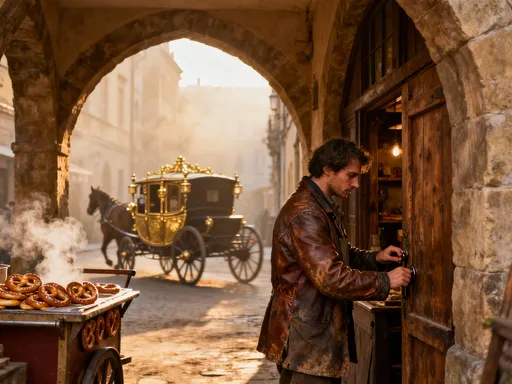
Entering Normandy from the east, the landscape unfolds with a quiet dignity that surprises even seasoned travelers. The first glimpse of Rouen’s skyline, where Gothic spires rise above a patchwork of slate roofs and half-timbered facades, feels like stepping into a world both preserved and lived-in. Unlike regions where history is cordoned off behind velvet ropes, Normandy integrates its past into daily life. The scent of woodsmoke and baking bread drifts through narrow alleyways, mingling with the crisp autumn air scented faintly by nearby apple orchards. Church bells toll across the Seine River, marking time not for tourists, but for locals heading to morning mass or the market.
What strikes most upon arrival is the absence of performance. There is no forced charm, no exaggerated nostalgia. Life moves at a deliberate pace—shopkeepers sweep their thresholds, children ride bicycles with baskets full of groceries, and elders sit on stone benches reading newspapers. This rhythm, steady and unselfconscious, invites travelers to shift their focus from ticking off landmarks to observing the subtle textures of provincial existence. The region’s identity is not defined by D-Day alone, nor by its famous coastline, but by the continuity of tradition in the everyday.
Even transportation reflects this balance between heritage and practicality. Regional trains connect towns efficiently, while bicycles remain a common sight in city centers and country lanes alike. Walking through Rouen’s old quarter, one notices how modern life coexists with centuries-old architecture—WiFi signs hang beside medieval carvings, and electric scooters nestle against stone walls that have stood since the 15th century. This layering of time is not chaotic but harmonious, a testament to a culture that values preservation without sacrificing livability.
For the culturally curious traveler, Normandy’s initial impression is not one of grand spectacle, but of depth. It challenges the expectation that significance must be loud or monumental. Instead, it suggests that meaning resides in the way a baker lifts a loaf from the oven, how a fisherman mends his nets at dawn, or how families gather in village squares on Sunday afternoons. These are not staged moments—they are the quiet pulse of a region that knows who it is, and doesn’t feel the need to prove it.
Rouen: Where Time Stands Still in Stone and Story
Rouen, the historic capital of Normandy, functions as a living museum—not because it is frozen in time, but because time continues to shape it. The city’s heart lies in its labyrinthine old town, where winding streets like Rue du Gros-Horloge lead to bustling marketplaces and centuries-old churches. The cathedral of Notre-Dame, immortalized by Monet’s series of paintings, stands as both a spiritual center and a symbol of enduring craftsmanship. Yet, its significance is not merely aesthetic. For residents, the cathedral is part of the daily soundscape—the chime of its bells marking hours, calling the faithful, and echoing across the river like a heartbeat.
What makes Rouen remarkable is how its inhabitants relate to history not as actors, but as custodians. The legacy of Joan of Arc, burned at the stake in the city’s marketplace in 1431, is not reduced to theatrical reenactments or kitschy souvenirs. Instead, her presence lingers in the quiet reverence of the modern memorial at the site of her execution. Locals pause there, not for photos, but in reflection. The story of Joan is taught in schools, referenced in literature, and woven into the regional identity—not as a distant tragedy, but as a defining moment in a collective memory that values courage and resilience.
Wandering through the covered market of Rouen, one encounters another dimension of cultural continuity. Under the iron-and-glass canopy of the historic market hall, vendors display cheeses wrapped in parchment, baskets of plump pink radishes, and rows of golden pears. The air is rich with the tang of Camembert, the sweetness of honey, and the briny freshness of oysters from the nearby coast. Here, food is not just sustenance—it is heritage. A cheese seller explains the difference between AOC Camembert and industrial versions; a butcher discusses the proper way to age salt-marsh lamb. These conversations are not performances for visitors—they are exchanges among neighbors, rooted in knowledge passed down through generations.
In the cafés surrounding Place du Vieux-Marché, elderly men gather over glasses of cider and games of pétanque, their laughter blending with the clink of bowls on stone. Young couples sip coffee at outdoor tables, speaking in rapid French that rolls like waves over cobblestones. The city does not cater to the tourist gaze—it simply exists, confident in its rhythms. To walk Rouen is to witness a culture that does not perform authenticity because it does not need to. It lives it, breathes it, and invites quiet observation rather than intrusive participation.
The Charm of Rural Normandy: Life Beyond the Guidebooks
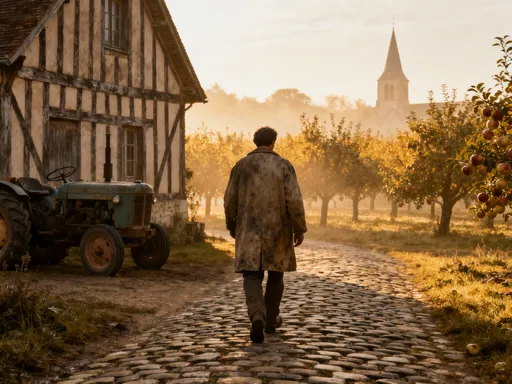
Just a short drive from the urban pulse of Rouen, the countryside of Normandy reveals a different kind of beauty—one defined not by monuments, but by continuity. Villages like Beuvron-en-Auge and Touques are not hidden gems so much as quiet constants, places where life unfolds according to seasons rather than tourist seasons. These are communities where half-timbered farmhouses with slate roofs stand beside apple orchards stretching toward the horizon, where roosters crow at dawn and church bells mark the hours without fanfare.
Staying in a gîte—a traditional country house converted for guests—offers an intimacy that hotels in city centers cannot match. Waking to the smell of woodsmoke and fresh milk, one steps outside to find a farmer leading a tractor down a muddy lane, its headlights cutting through the morning mist. The pace is unhurried. Neighbors greet each other by name, and meals are prepared with ingredients from the garden or the local market. There is no rush, no pressure to “see everything.” Instead, there is space—to sit on a bench and watch swallows dart over fields, to listen to the rustle of leaves in an ancient pear tree, to share a glass of cider with a host who speaks slowly, deliberately, in French that carries the cadence of the land.
Autumn in rural Normandy is a season of transformation. Apple harvests fill the air with a sweet, fermented aroma as fruit is gathered for cider, calvados, and pommeau. At a family-run cidery, visitors may be invited to watch the pressing process—apples crushed beneath a wooden millstone, juice flowing into oak barrels for fermentation. The owner, often a third- or fourth-generation producer, speaks with pride about terroir, about how the soil and climate give Norman cider its distinctive depth. Calvados, the region’s apple brandy, is aged for years in cellars beneath stone farmhouses, its flavor deepening with time. Pommeau, a blend of apple juice and young calvados, is smoother, sweeter—a drink for welcoming guests.
Equally central to rural life is dairy production. Norman butter, rich and golden, carries AOC designation for its high cream content and traditional churning methods. Small dairies dot the countryside, producing butter, crème fraîche, and cheeses like Pont-l’Évêque and Livarot. A visit to one such dairy might include a tour of the aging room, where wheels of cheese rest on wooden shelves, developing rinds dusted with mold that contributes to their complex flavor. The cheesemaker, hands stained from washing rinds with brine, explains how humidity and temperature are carefully monitored—knowledge passed down, not learned from manuals.
These experiences are not packaged tours. They are glimpses into a way of life that values slowness, craftsmanship, and connection to the land. For the traveler willing to step off the main roads, rural Normandy offers not just scenery, but a philosophy: that meaning is found not in movement, but in presence.
Coastal Culture: More Than D-Day—The Soul of the Seaside
The Normandy coast is often remembered for one day in 1944, but its identity stretches far beyond the beaches of Operation Overlord. In ports like Honfleur and Étretat, the sea shapes not just the economy, but the soul of the community. These are not resort towns built for tourism, but working harbors where fishing boats return at dawn with nets full of mackerel, sole, and scallops. The rhythm of life here is tied to tides, weather, and the seasons—fishermen know when to go out, when to stay in, and how to read the sky for signs of change.
Honfleur, with its picturesque Vieux Bassin framed by 17th-century houses, feels like a painting come to life. Yet, it is not a museum piece. Boats still dock here, their decks cluttered with gear, their hulls marked by salt and time. Artists sit along the quay, sketching the play of light on water, continuing a tradition that drew Boudin and Monet to this very spot. The port buzzes with quiet activity—fishmongers arrange their catch on ice, children chase seagulls, and couples stroll with ice cream in hand. But the focus remains local. Restaurants pride themselves on serving seafood caught that morning, their menus changing with what the boats bring in.
Étretat, famous for its dramatic chalk cliffs and natural arches, draws visitors for its geology, but for residents, it is a place of belonging. The cliffs are not just scenery—they are part of the community’s identity. Families walk the trails together, dogs bounding ahead, elders pointing out the “elephant trunk” formation with familiar affection. Local festivals celebrate maritime heritage: boat launches are marked with ceremonies, blessings are given to vessels before fishing season, and seafood feasts bring generations together in communal halls. These events are not staged for outsiders—they are expressions of pride, gratitude, and continuity.
The sea also inspires creativity. Pottery studios along the coast use local clay, their glazes echoing the colors of sand, seaweed, and stormy skies. Fishermen’s wives once knitted thick woolen sweaters—now, artisans reproduce these patterns in boutique shops, not as souvenirs, but as tributes to a vanishing craft. Even the food reflects the sea’s influence: moules marinières simmered in white wine and cream, grilled sardines with lemon, and scallops wrapped in bacon are not just dishes, but stories of the coast told on a plate.
To understand Normandy’s coastline is to see it not as a battlefield or a backdrop, but as a living culture shaped by the sea. It is a place where history is honored, but life moves forward—rooted in tradition, yet open to those who come with respect and quiet curiosity.
Norman Cuisine: A Cultural Language of Its Own
In Normandy, food is not merely nourishment—it is a language, a way of expressing identity, seasonality, and connection. The region’s culinary traditions are deeply tied to its land and sea, built on a foundation of dairy, apples, and fresh seafood. To eat in Normandy is not to consume, but to participate in a culture that values slowness, quality, and shared experience. Meals unfold over hours, not minutes, with multiple courses, flowing conversation, and an emphasis on savoring rather than rushing.
The heart of Norman cuisine lies in its dairy. Crème fraîche, thick and tangy, is used in sauces, soups, and desserts. Butter, especially the AOC-certified Isigny and Beurre d’Échiré, is so prized that it is often served simply on bread, allowing its rich flavor to stand alone. Cheeses like Camembert, Pont-l’Évêque, and Livarot are not just regional specialties—they are cultural markers, each with its own terroir, aging process, and ritual of consumption. In a fromagerie in Bayeux, a cheesemonger might explain how Camembert should be brought to room temperature before eating, how its bloomy rind contributes to its earthy aroma, and why industrial versions lack the depth of the authentic product.
Apples, too, are central to the Norman table. They appear in savory dishes like pork with apples, in desserts like tarte Normande, and in drinks that define the region’s spirit. Cider, ranging from dry to sweet, is the everyday beverage, often served in bowls rather than glasses—a tradition dating back to farmers who needed both hands free while drinking. Calvados, the apple brandy aged in oak barrels, is reserved for special occasions, sipped slowly after dinner as a digestif. Pommeau, a blend of unfermented apple juice and young calvados, is smoother, often enjoyed as an aperitif. To share a toast of calvados with a farmer is not just a gesture of hospitality—it is an act of cultural exchange.
Seafood, particularly from the English Channel, completes the culinary picture. Oysters from Cancale and scallops from Saint-Vaast-la-Hougue are celebrated for their freshness and sweetness. In coastal towns, restaurants often list the boat that caught the fish that morning, reinforcing the connection between sea and plate. A dish like moules à la crème—mussels steamed in white wine, cream, and shallots—is simple in preparation but profound in flavor, a reflection of the region’s ability to elevate humble ingredients through care and tradition.
For the traveler, eating locally is not just a pleasure—it is a form of cultural listening. It requires slowing down, asking questions, and being present. It means accepting that a meal might take three hours, that the menu might be in French, that the wine list might feature only regional producers. But in that slowness lies understanding: that food in Normandy is not a commodity, but a continuation of a way of life that values care, craft, and community.
Artistic Legacies: How Normandy Shaped the Way We See Light
Normandy’s influence on art is not accidental—it is born of a landscape that teaches you how to see. The region’s soft, diffused light, its ever-changing skies, and its harmonious blend of land, sea, and sky made it a magnet for Impressionist painters in the 19th century. Claude Monet, who lived in Giverny for over four decades, found in Normandy’s gardens, rivers, and meadows a subject that never exhausted his curiosity. His water lily paintings, created in the garden he meticulously designed, are not just masterpieces—they are meditations on light, reflection, and perception.
Walking through Monet’s garden today is to step into one of his canvases. The green arbor draped with wisteria leads to the water lily pond, where the Japanese bridge arches over still water. The colors—pinks, purples, greens—are not artificial, but carefully chosen to harmonize with the natural light. Visitors are asked to remain quiet, not out of formality, but out of respect for the space as a living artwork. Photographers line the banks, but the best way to experience the garden is simply to sit, to watch how the light shifts over the water, how shadows move across the lilies, how the colors deepen as the sun lowers.
Monet was not alone. Eugène Boudin, born in Honfleur, painted the skies and beaches of Normandy with a sensitivity to atmosphere that influenced the young Monet. His seascapes capture the fleeting moments of cloud cover, wind, and light that define the northern coast. Gustave Courbet, too, was drawn to Étretat’s cliffs, painting their dramatic forms with bold, textured strokes. These artists did not impose their vision on Normandy—they responded to it, allowing the landscape to shape their technique.
Today, that artistic legacy lives on. Plein air painters still gather in Honfleur and Étretat, setting up easels on the quay or along cliff paths. Photography workshops teach students how to capture the region’s unique luminosity. Even casual visitors find themselves pausing more often, looking more closely—notice the way mist rolls over a field at dawn, how sunlight filters through apple blossoms, how the sea changes color with the weather. Normandy does not just offer beauty—it trains the eye to appreciate nuance, to see not just what is there, but how it is there.
In this way, art in Normandy is not a relic of the past, but a living practice. It invites travelers not just to look, but to see—to slow down, to observe, to perceive the world with greater depth. It is a cultural gift, one that lingers long after the journey ends.
Traveler’s Reflection: Why Perspective Changes Everything
Leaving Normandy, one carries not just photographs or souvenirs, but a shift in perception. The region does not demand admiration through spectacle. It offers something quieter, more enduring: the understanding that culture is not found in monuments alone, but in the way people live, eat, work, and remember. The typical tourist itinerary might include D-Day beaches, Mont-Saint-Michel, and Monet’s garden—but the deeper journey lies in the moments between: a conversation with a cheesemaker, a sunrise over a fishing port, a shared toast of cider in a village square.
This kind of travel requires a different mindset. It asks for patience, humility, and a willingness to observe without intruding. It means resisting the urge to document every moment, and instead, allowing some to remain unphotographed, unfilmed—felt, remembered, internalized. It means choosing a market over a museum, a gîte over a chain hotel, a local meal over a tourist trap. These choices do not diminish the experience—they deepen it.
Normandy teaches that authenticity is not a performance. It is not something crafted for visitors. It is the rhythm of daily life, the pride in tradition, the quiet confidence of a region that knows its worth. To travel here with cultural curiosity is to move beyond sightseeing and into understanding. It is to recognize that the most meaningful moments are often the smallest—the way a baker lifts a loaf from the oven, how a fisherman ties a knot, how light falls on a stone wall at dusk.
And so, the invitation is clear: travel not with a checklist, but with open eyes. Not to collect experiences, but to absorb them. Normandy does not reveal itself all at once. It unfolds slowly, like a letter written in a familiar hand. It asks only that you slow down, pay attention, and listen. Because in the end, the truest journeys are not measured in miles, but in moments that change the way you see the world.