You Won’t Believe What’s Hidden in Petra’s Walls
Deep in the desert of Jordan, Petra isn’t just carved—it’s alive with secrets. I never expected ancient architecture to feel so personal, so mysterious. Behind every sandstone curve, there’s a story whispered through time. From the iconic Treasury to unseen chambers few tourists reach, the city’s rock-cut brilliance goes beyond postcard views. This is more than history—it’s an experience that reshapes how you see human ingenuity. Walking through Petra is like stepping into a silent conversation between past and present, where every shadowed alcove and sunlit façade speaks of ambition, faith, and artistry etched into stone. For the thoughtful traveler, especially those seeking meaning as much as scenery, Petra offers not just sights, but soul.
The First Glimpse: Entering Through the Siq
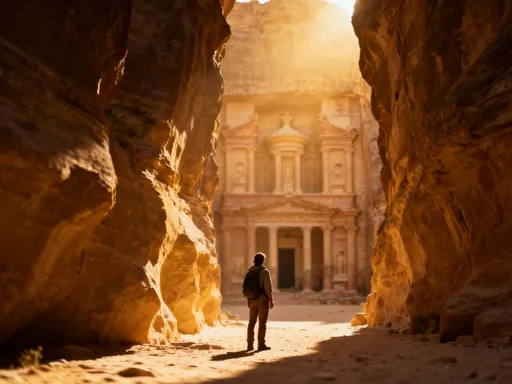
Approaching Petra begins with anticipation, not spectacle. Visitors do not see the city all at once; instead, they are drawn into it, step by step, through the narrow gorge known as the Siq. This natural sandstone corridor, stretching nearly a kilometer long, narrows at points to barely ten meters across, with walls rising over 80 meters on either side. Sunlight filters in unevenly, casting shifting patterns across the rock face, while the air remains cool and still. The path beneath your feet is smooth, worn down by centuries of footsteps—from ancient traders to modern wanderers—each drawn forward by curiosity and quiet awe.
What makes the Siq more than just a passageway is its intentional design. The Nabataeans, the ancient Arab people who established Petra as their capital over 2,000 years ago, transformed this natural fissure into a ceremonial approach. They engineered an advanced water management system within the canyon walls, carving channels and installing ceramic pipes to direct seasonal runoff into cisterns throughout the city. These innovations not only sustained life in the arid desert but also symbolized control over nature, reinforcing the city’s power and sophistication. Even today, remnants of these channels can be seen along the path, silent testaments to a civilization ahead of its time.
Then, suddenly, after rounding a final bend, it appears: Al-Khazneh, the Treasury, framed perfectly between the towering walls of the Siq. Its intricate façade—complete with Corinthian columns, sculpted urns, and divine figures—rises dramatically from the rock, glowing in the morning light. This moment of revelation is unmatched in the ancient world. Unlike other archaeological sites where ruins sprawl openly, Petra saves its grandest image for last, turning arrival into an emotional climax. The Treasury was likely not a vault of gold, as local legend suggests, but a royal tomb, possibly for a Nabataean king. Yet its name persists, fueled by centuries of myth and the imagination of those who first glimpsed it through the canyon’s embrace.
Beyond the Postcard: Discovering Petra’s Hidden Chambers
While the Treasury draws crowds, Petra’s true depth lies beyond the main path, where quieter tombs and forgotten chambers await those willing to wander further. These lesser-known structures, tucked into side trails and perched on higher terraces, offer a more intimate understanding of the city’s complexity. Unlike the polished grandeur of Al-Khazneh, these spaces often show signs of incomplete carving or simpler decoration, revealing the range of skill, status, and purpose behind Petra’s construction. Some are modest family tombs; others appear to have served religious or administrative functions, their exact uses still debated by archaeologists.
One such area is the Royal Tombs complex, a cluster of four monumental facades carved into the northern cliffside. Though slightly farther from the central route, these tombs display remarkable variation in style and scale. The Urn Tomb, for instance, features a large central chamber with arched ceilings later adapted by the Romans into a Byzantine church. Its interior once housed mosaics, remnants of which suggest a later layer of cultural reuse. The Silk Tomb, named for the swirling patterns in its stone, showcases the natural beauty of the rock itself, where layers of red, pink, and ochre ripple like fabric caught in wind. These sites are often visited by only a fraction of the tourists who flock to the Treasury, allowing for moments of solitude and reflection.
Further afield, hidden along winding paths leading uphill, are smaller niches and chambers that may have served as meditation spaces, storage areas, or even homes for priests and caretakers. Some of these spaces contain inscriptions in Nabataean script, a precursor to Arabic, offering rare personal glimpses into the lives of those who lived and died here. These quiet corners remind visitors that Petra was not just a ceremonial city, but a living, breathing community where people worshipped, traded, and mourned. Exploring them shifts the narrative from spectacle to story—from seeing Petra as a monument to understanding it as a home.
A City Carved, Not Built: Understanding the Craftsmanship
Petra’s architecture defies conventional construction. Rather than assembling buildings from stone blocks, the Nabataeans carved entire structures directly out of the rose-red cliffs, working top-down from the highest point of each façade. This method required extraordinary planning and precision. Artisans would first outline the design on the rock face, then begin chiseling from the top corners, gradually moving downward and inward. As they removed material, they left behind smooth surfaces, detailed reliefs, and deep interior chambers—all without the benefit of modern tools or machinery.
Archaeological evidence suggests that workers used iron chisels, hammers, and measuring rods made of wood or bronze. Scaffolding, likely constructed from wooden beams and ropes, allowed access to higher sections. Given the scale of some tombs—reaching over 40 meters in height—the process could have taken years, even decades, for a single structure. The Monastery (Ad-Deir), one of the largest monuments in Petra, is believed to have required generations of labor. Its massive façade, nearly 50 meters wide and 45 meters high, stands as a testament to both ambition and endurance.
What makes this craftsmanship even more remarkable is the integration of natural features into the design. Builders followed the contours of the rock, adapting their plans to the stone’s color, texture, and structural integrity. In some cases, they left certain areas uncarved to support the façade, creating pillars and platforms that blend seamlessly with the mountain. The result is not just architecture, but sculpture on an urban scale—a city shaped like a single work of art. This approach also meant that no two structures were identical; each responded to its unique location, making Petra a mosaic of individual expressions within a unified vision.
Why the Architecture Feels So Different—And So Human
Walking through Petra, one senses that these monuments were not built merely to impress, but to connect—to the divine, to memory, and to identity. The architectural style reflects this intention, blending influences from Greece, Egypt, Mesopotamia, and the Arabian Peninsula. Corinthian columns stand beside Egyptian-style obelisks; pediments echo classical temples, while niches and triclinia (dining halls) reflect local customs of funerary feasting. This fusion was not accidental. As a major hub along ancient trade routes linking Arabia, Egypt, and the Mediterranean, Petra absorbed cultural ideas as readily as it did goods like frankincense and myrrh.
Yet beyond the stylistic mix, it is the small details that make Petra feel profoundly human. Faded carvings of animals, deities, and floral motifs suggest personal devotion. Some tombs feature inscriptions asking passersby to remember the deceased, a plea across time that still resonates today. Others include small benches or alcoves where mourners may have gathered, creating spaces for grief and remembrance. Even the placement of certain tombs—facing east toward the rising sun—hints at spiritual beliefs about rebirth and the afterlife.
These elements transform Petra from a historical site into an emotional landscape. Unlike grand but impersonal ruins, Petra’s architecture invites intimacy. A handprint left in soft stone, a worn step shaped by centuries of feet, a niche just large enough for a single person to sit—each detail whispers of individual lives lived long ago. For modern visitors, especially those navigating the complexities of family, loss, and legacy, these quiet moments can be unexpectedly moving. Petra does not shout its significance; it murmurs it, softly, in the language of stone and shadow.
Smart Exploration: Choosing Paths That Reveal More
To experience Petra fully, one must move beyond the well-trodden trail. While the Treasury and the Street of Facades attract the majority of visitors, those seeking a deeper connection will find richer rewards in quieter corners of the site. Timing plays a crucial role. Arriving early in the morning, just after sunrise, allows travelers to walk the Siq in near silence, with golden light slowly illuminating the Treasury. Alternatively, visiting in the late afternoon offers softer shadows and fewer crowds, making it easier to explore side paths without distraction.
One of the most rewarding detours is the climb to the High Place of Sacrifice, a ceremonial platform atop a mountain ridge. The ascent is moderate but requires steady footing, offering panoramic views of the entire city along the way. At the summit, stone altars and ritual basins remain, hinting at ancient religious practices. Though the exact nature of ceremonies held here is unknown, the sense of elevation—both physical and spiritual—makes the effort worthwhile. Another less-visited gem is the upper trail leading to the Monastery, which provides alternative perspectives and cooler shade during warmer months.
Hiring a local guide enhances the journey immeasurably. Knowledgeable guides often share stories passed down through generations, point out subtle carvings invisible to the untrained eye, and explain cultural meanings behind architectural details. They may also lead visitors to lesser-known viewpoints or hidden alcoves that are not marked on standard maps. This personal connection fosters a deeper appreciation for Petra not just as an archaeological wonder, but as a living part of Jordanian heritage. For families and older travelers, pacing is key—planning rest stops, bringing water, and wearing comfortable shoes ensures that exploration remains enjoyable rather than exhausting.
Preservation and Respect: Seeing Petra Responsibly
As one of the New Seven Wonders of the World and a UNESCO World Heritage Site, Petra faces growing pressure from tourism. While visitation brings economic benefits to local communities, it also accelerates erosion, damages fragile carvings, and strains infrastructure. Rock surfaces, already weakened by centuries of wind and water, are further compromised when touched or climbed on. Graffiti, though less common now, remains a concern, as does littering in remote areas. Climate change adds another layer of risk, with increased rainfall causing flash floods that threaten ancient water channels and structural stability.
UNESCO and Jordan’s Department of Antiquities have implemented conservation programs to monitor and protect the site. These include installing protective shelters, restricting access to vulnerable areas, and training local teams in preservation techniques. But sustainable tourism also depends on individual choices. Visitors can help by staying on marked paths, avoiding physical contact with carvings, and refraining from removing stones or debris. Carrying reusable water bottles and packing out trash supports environmental care, while supporting local artisans and licensed guides strengthens community-based tourism.
Responsible travel is not just about rules—it’s about mindset. Approaching Petra with reverence, as a place of memory and meaning, encourages more mindful behavior. For many women in their 30s to 50s, who often balance caregiving with personal growth, this kind of travel resonates deeply. It reflects values of stewardship, respect, and intentionality—qualities they bring to their homes and communities. By honoring Petra’s fragility, visitors become part of its ongoing story, ensuring that future generations can also stand in awe beneath its carved cliffs.
Petra’s Whisper: When Ancient Stones Speak
There is a moment, in the stillness between footsteps, when Petra seems to speak. Not in words, but in presence. It is felt in the coolness of a shaded chamber, the weight of a gaze from a sculpted deity, the way light shifts across a tomb façade at dusk. For those who listen, the city offers more than history—it offers reflection. Standing before a 2,000-year-old tomb, one cannot help but consider what endures: not wealth or power, but creativity, resilience, and the desire to be remembered.
This is Petra’s quiet power. It does not glorify conquest or empire, but honors craftsmanship, faith, and the human need to leave a mark. Its tombs were not built for the living, but for those who came after—a message in stone that says, I was here. I mattered. For modern travelers, especially women who have shaped families, nurtured relationships, and carried quiet strength through life’s seasons, this sentiment carries deep resonance. Their own legacies, woven into daily acts of love and perseverance, echo the same truth: that meaning is carved, not found.
To visit Petra is not merely to see an ancient city, but to participate in a dialogue across time. The Nabataeans are gone, but their hands remain in every chisel mark, their voices in every wind-carved curve. And in return, today’s visitors leave something too—not in stone, but in memory, in care, in the choice to protect what is fragile and beautiful. Petra endures because we choose to let it. And in that choice, we too become part of its story—a story of what lasts, long after the crowds have gone and the desert returns to silence.